Orange County Regional History Center
Downtown Orlando
Central Florida history in the restored 1927 Orange County courthouse, from the first peoples to the theme parks.
Official site: Orange County Regional History Center ↗Orlando · History
From Native peoples and a Seminole War fort to cattle, citrus, rockets and the world's theme park capital: how Central Florida became what it is, era by era. Every fact is linked to its source, and legends are marked as legends.
Before 1700
People likely first arrived in what is now Florida more than 14,000 years ago. By the time Spanish explorer Juan Ponce de León arrived in 1513, the peninsula was home to many Native groups, each with its own culture and way of life.
Across north Florida lived the Timucua. They weren't one nation but many groups who spoke dialects of the same language, farmed, hunted and fished, and worshipped the sun and moon. When Europeans arrived in the 1500s, the Timucua may have numbered about 200,000. Closer to today's Orlando, the Mayaca lived along the St. Johns River near present-day DeLand. A 10-foot carved owl effigy, now thought to be Mayaca work, was pulled from the river at Hontoon Island in 1955.
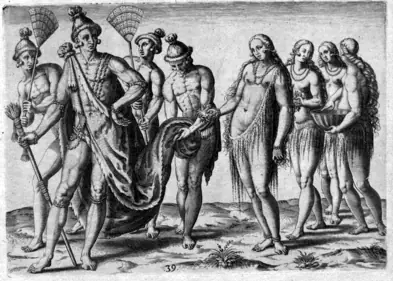
European diseases, war and slave raids devastated Florida's first peoples. By 1800 few Timucua were left, and survivors joined other tribes such as the Seminole and Muscogee Creek.
What the record can’t tell us: archaeologists know far less about the Orlando lakes themselves than about the coasts and rivers, so we’ve stuck to what the park services and the History Center document.
Sources: Orange County Regional History Center: Becoming Florida · National Park Service: The Timucua · Florida State Parks: Florida's Native Archaeology
1700s–1858
In the 1700s, Creek bands from Georgia and Alabama moved south into Florida. By the 1760s they and others were known as Seminoles, a people that also included Yuchis, Yamasees, survivors of earlier Florida tribes, and people who had escaped slavery.
After the United States took over Florida in 1821, the 1823 Treaty of Moultrie Creek pushed the Seminoles onto a reservation in Central Florida so North Florida could be opened to plantation slavery. The Indian Removal Act of 1830 then aimed to move them west of the Mississippi, and the Second Seminole War broke out in December 1835.
In 1838 the U.S. Army built Fort Gatlin just south of today's Orlando city limits. By 1840 a small community had grown up around it. East of town, the Army had built Fort Christmas in 1837 as a supply depot; a full-size replica stands there today.
The Army declared the Second Seminole War over in 1842. When the Third Seminole War ended in 1858, more than 3,000 Seminoles had been forced west, and only a few hundred at most remained in Florida, deep in the southern swamps. Their descendants organized the federally recognized Seminole Tribe of Florida in 1957.
Sources: Florida Memory (State Archives): Timeline of the Florida Seminoles · Florida Department of State: Seminole History · Florida Memory (State Archives): Treaty of Moultrie Creek, 1823 · City of Orlando: Orlando History · Orange County Government: Fort Christmas Historical Park
1840s–1857
Georgia cattleman Aaron Jernigan and his family settled near the fort in the early 1840s, and the settlement took their name. Jernigan got a post office on May 30, 1850.
In 1856, voters chose the scattering of log cabins around Lake Eola as the new seat of Orange County. In 1857 the post office adopted the settlement's new name: Orlando.
Sources: City of Orlando: Orlando History · Florida Historical Society: How did Orlando get its name? · Orange County Regional History Center: Orlando Changes
1856–1888
Early Orlando was cattle country. Rowdy cow hunters drove herds through town, and the courthouse burned down just before an 1868 cattle-rustling trial. Jacob Summerlin, the “Cattle King of Florida,” bought 200 acres in what is now downtown in 1873.
On July 31, 1875, the Town of Orlando incorporated. It had 85 inhabitants, 22 of them qualified voters, covered about 4 square miles, and elected William Jackson Brack its first mayor. By a special act of the Legislature that took effect Feb. 4, 1885, Orlando became a city.
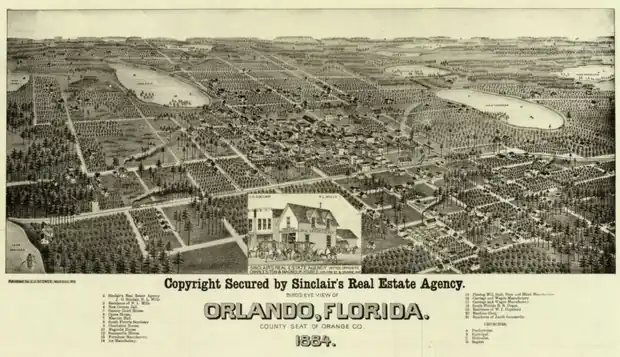
In 1883 the Summerlin family gave a strip of land around a lake locals called Sandy Beach for public use. It was renamed Lake Eola and became a city park in 1888.
Sources: Orange County Regional History Center: Orlando Changes · City of Orlando: Lake Eola History · City of Orlando: Orlando History · Florida Historical Society: Orlando incorporated, July 31, 1875 · City of Orlando Code, historical note (Municode)
1870–1890s
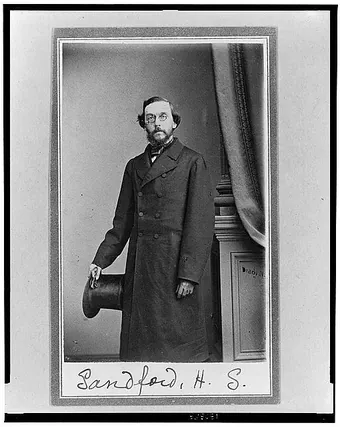
In 1870, diplomat Henry Shelton Sanford, a former U.S. Minister to Belgium, bought 12,548 acres on Lake Monroe and planned a city he called “the Gate City of South Florida.” Sanford incorporated in 1877. He recruited English and Swedish settlers, planted citrus, and in 1880 set up a land company in London to attract investors.
On Jan. 10, 1880, ground was broken in Sanford for the South Florida Railroad, and former President Ulysses S. Grant, Sanford's friend, threw the first spadeful of dirt. The 23-mile line to Orlando opened on Oct. 1, 1880. The next day's celebration train ended with a barbecue in Orlando, including tables for the African American workers who built the line.
The railroad set off Orlando's first boom. The population grew from about 200 in 1880 to 1,666 in 1884 and about 2,000 by 1886. Because the tracks ran along the west side of downtown, hotels and shops moved west from the courthouse square to Orange Avenue. In 1889 the wooden depot gave way to the brick station that still stands at Church Street.
Sources: City of Sanford: History and Historic Preservation · UCF RICHES: Sanford Railroad Depots · UCF RICHES: Church Street Station / Old Orlando Railroad Depot · Orange County Regional History Center: Orlando Changes
1880–1937
Beginning in 1880, newly freed African Americans from Georgia, Alabama and farther north settled near Maitland. They cleared land, planted crops and groves, and helped build homes, hotels and the railroad. Joseph E. Clark dreamed of a town of their own, and with help from Lewis Lawrence and landowner Josiah Eaton, the settlers acquired 112 acres.
On Aug. 15, 1887, 27 electors met and chose Columbus H. Boger as mayor, and Eatonville was incorporated. The town calls itself the first town in the country organized, governed and incorporated by African Americans, and it is one of the first and oldest incorporated Black towns in the United States.
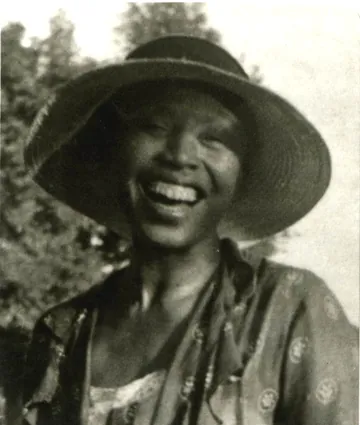
Zora Neale Hurston (1891–1960) moved to Eatonville as a toddler. She became a writer and anthropologist of the Harlem Renaissance, collecting Black Southern folklore, and set much of her 1937 novel Their Eyes Were Watching God in Eatonville. The ZORA! Festival has celebrated her every year since 1990.
A few miles east, Winter Park's west side around Hannibal Square is the city's historic African American community. Its story is kept at the Hannibal Square Heritage Center.
Sources: Town of Eatonville: About Eatonville · Florida Historical Society: Eatonville, Aug. 15, 1887 · National Endowment for the Arts: Their Eyes Were Watching God · Library of Congress: Zora Neale Hurston research guide · Hannibal Square Heritage Center
1894–1895
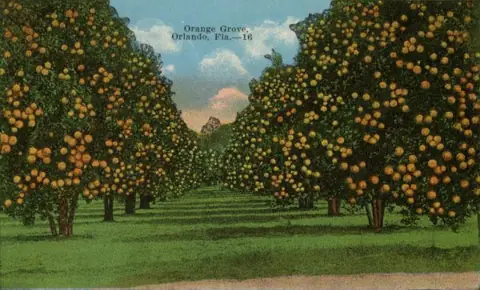
By the 1890s Orlando was the hub of Florida's citrus industry. Then, on Dec. 29, 1894, the temperature fell to at least 18 degrees in Orlando. A second freeze followed on Feb. 7, 1895. The December freeze killed the fruit, and the February freeze killed the trees. Afterward, growers reported 21,737 acres planted in citrus and not one box produced.
A new tree took about seven years to bear fruit, and few small growers could wait that long. Big growers bought them out and came to dominate the business. Citrus did come back: by the 1920s, twelve packing houses lined the railroad downtown, and more than half of Florida's crop passed through Orlando.
Sources: Orange County Regional History Center: The Great Freeze of 1894–1895 · Orange County Regional History Center: Orlando Changes · City of Orlando: Orlando History
1920s
After World War I, tourists drove to Florida in their new automobiles, and many stayed. Orlando grew from just over 9,000 people in 1920 to more than 27,000 in 1930, and more than a dozen new subdivisions spread out from the city between 1924 and 1926 alone. Then came the bust: in the Great Depression, foreclosed houses and empty subdivisions brought down banks and businesses.
The decade also brought one of the worst acts of racial violence in the county's history. On Election Day, Nov. 2, 1920, white men in Ocoee chased Moses Norman, a Black landowner, from the polls when he tried to vote. That night a posse went to the home of another Black landowner, July Perry. Perry was taken to the Orlando jail, and early the next morning a group of white men took him from his cell and lynched him. A mob burned Black-owned homes, churches and a lodge in Ocoee, and within months every Black resident had been forced out of town. A marker honoring Perry was unveiled in 2019 at Heritage Square, outside the History Center.
Under segregation, Black visitors were shut out of most hotels. Dr. William Monroe Wells built the South Street Casino and the Wells'Built Hotel in Parramore after getting building permits in 1924 and 1926. The hotel hosted many now-famous Black performers and is now a museum on the National Register of Historic Places.
Sources: Orange County Regional History Center: Orlando Changes · Orange County Government: Marker to honor July Perry (2019) · Wells'Built Museum: About
1940–1999
Prosperity returned in 1940 as the country prepared for war. The Army took over Orlando Municipal Airport as the Orlando Army Air Base, which officially opened on Dec. 1, 1940, and factories opened to make war materiel. In late 1942 the Army Air Forces School of Applied Tactics moved to Orlando, and a new airfield south of town became Pinecastle Army Airfield. Many soldiers who trained here came back to live, and by 1950 Orlando had 51,826 people.
Pinecastle later became an Air Force base for jet bombers. In 1957 its commander, Col. Michael N. W. McCoy, died when his B-47 crashed north of Orlando, and in 1958 the base was renamed McCoy Air Force Base. In October 1962, during the Cuban Missile Crisis, U-2 spy planes flew from McCoy.
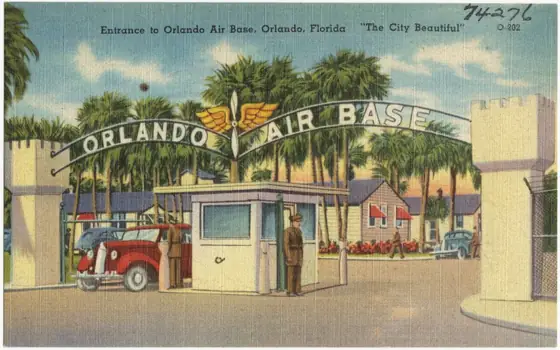
McCoy closed in the mid-1970s. In 1975 the City of Orlando received the land and the Greater Orlando Aviation Authority was created. In 1976 the field became Orlando International Airport, and it kept McCoy's code: MCO.
The old Orlando air base became Naval Training Center Orlando on June 30, 1968, where hundreds of thousands of recruits went through boot camp. The Navy wound it down in the 1990s and ended all operations on April 30, 1999. Demolition began in 2000, and the land became the Baldwin Park neighborhood.
Sources: Orange County Regional History Center: Orlando Changes · Orlando Memory (Orange County Library System): Naval Training Center Orlando · Museum of Florida History: Pinecastle Army Airfield · UCF RICHES: Col. Michael N. W. McCoy at Pinecastle AFB · McCoy Federal Credit Union: History · HistoryNet: Forgotten casualty of the Cuban Missile Crisis · Orlando International Airport: History of MCO · Hangar 5 Foundation: McCoy Air Force Base, 1958 · U.S. Navy BRAC office: Former Naval Training Center Orlando
1950–1960s
On July 24, 1950, a rocket called Bumper 8 became the first launch from Cape Canaveral, about an hour east of Orlando.
In September 1956 the Baltimore-based Glenn L. Martin Company announced it had bought nearly 12 square miles southwest of Orlando for a missile plant. The plant opened on Dec. 4, 1957, and built missiles such as the Pershing. By 1961 the company, by then Martin Marietta, was Florida's largest single employer, with about 10,500 people working south of Orlando. After another merger in 1995 it became Lockheed Martin.
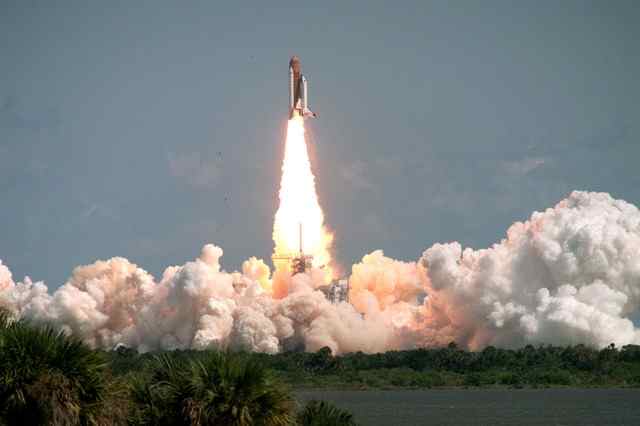
The space-age jobs created demand for a local university. That became Florida Technological University (see a big-league city).
Sources: NASA: 70 Years Ago, First Launch from Cape Canaveral · Orlando Memory (Orange County Library System): The Martin Company · Orange County Regional History Center: Orlando Changes · UCF Libraries: History of FTU & UCF · NASA: STS-52
1963–1971
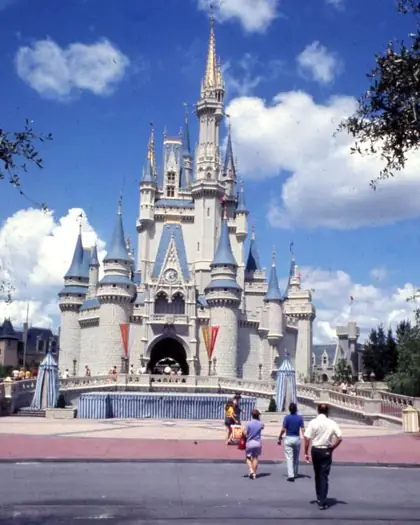
In November 1963, Walt Disney flew over Central Florida with a team looking for a site for an East Coast park. On the flight home he said, “Well, that's the place—Florida.”
From 1964, Disney attorney Bob Foster, using the name “Bob Price,” quietly bought land through a set of shell companies with names like Reedy Creek Ranch Lands, Bay Lake Properties, Ayefour Corporation, Latin American Development and Management Corporation and Tomahawk Properties. Local papers buzzed about a “mystery industry,” and rumors pointed to Ford, McDonnell Aircraft and Boeing.
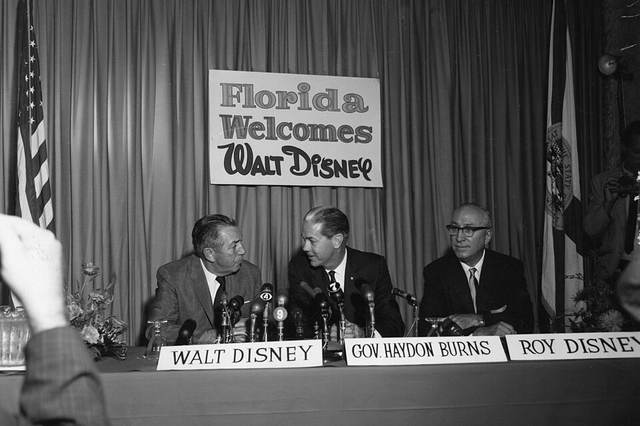
On Oct. 24, 1965, the Orlando Sentinel ran the headline “We Say: Mystery Industry Is Disney,” after reporter Emily Bavar read Walt's dodge of her question as a yes. Gov. Haydon Burns confirmed it the next day. In all, the company bought more than 27,400 acres at an average of about $180 an acre.
On Nov. 15, 1965, Walt and Roy Disney announced their plans at Orlando's Cherry Plaza Hotel. Walt died in December 1966. Roy, ready to retire, stayed to see his brother's project built. Walt Disney World opened on Oct. 1, 1971, with the Magic Kingdom and two hotels. Roy presided at the dedication that October and died that December.
Sources: D23: How Walt Disney World Found Its Home in Florida · D23: Walt Disney World Resort · D23: Magic Kingdom Park
1971–2025
After 1971, tourism displaced agriculture. Orange County's population more than doubled between 1971 and 1999, from 344,311 to more than 846,000, and in 2000 alone Central Florida welcomed nearly 43 million tourists. Freezes in the 1980s wiped out much of what was left of the local citrus groves.
Sources: Orange County Regional History Center: Orlando Changes · SeaWorld: Frequently asked questions (history) · D23: Walt Disney World Resort · UPI Archives, June 7, 1990: Universal opens Florida theme park · Universal Destinations & Experiences: History · D23: Disney's Animal Kingdom · Universal: Islands of Adventure celebrates 25 years · Universal Orlando press release: Epic Universe officially opens May 22, 2025
1968–2024
The Florida Legislature authorized a new university for Central Florida in 1963. Named Florida Technological University in 1966, it opened classes on Oct. 7, 1968, with 1,948 students, and became the University of Central Florida in December 1978. UCF has since grown into one of the largest universities in the country.
The NBA awarded Orlando the Magic on April 22, 1987, and the team played its first season in 1989–90. The Magic reached the NBA Finals in 1995 and 2009.
Orlando City SC played its first Major League Soccer season in 2015. Its sister club, the Orlando Pride, joined the National Women's Soccer League in 2016. In 2024 the Pride won the NWSL Shield and then the NWSL Championship, beating the Washington Spirit 1–0, bringing Orlando its first major-league professional title.
Sources: UCF Libraries: History of FTU & UCF · Orlando Magic (NBA.com): 25 years of Magic history · Orlando City SC: Inaugural MLS season · Orlando City SC: Orlando Pride launch (2015) · Orlando Pride: 2024 NWSL Championship match report
June 12, 2016
In the early hours of June 12, 2016, a gunman attacked the Pulse nightclub and took the lives of 49 people. It is one of the darkest days in Orlando's history. The city came together under the message #OrlandoUnited.
A permanent Pulse Memorial will stand on the site. Its design grew out of a concept by an 18-member advisory committee of Pulse families, survivors, members of the LGBTQ+ community and others. In October 2026 the city sent the construction contract to City Council for a vote, and the memorial is expected to be finished by the end of 2027. It will include a Survivor Wall carrying a passage from Lin-Manuel Miranda's “Sonnet to Orlando.” Updates are at pulseorlando.org.
Sources: City of Orlando: Pulse Memorial next steps (Oct 2026)
2000s–today
SunRail commuter trains began running on May 1, 2014, on 32 miles of track with 12 stations. The line reached Poinciana on July 30, 2018, and DeLand on Aug. 12, 2024, and now runs 61 miles with 17 stations through Volusia, Seminole, Orange and Osceola counties.
In southeast Orlando, Tavistock's Lake Nona has grown into a health and science hub. It's home to UCF's College of Medicine and Health Sciences Campus, the Orlando VA Medical Center, Nemours Children's Hospital and a University of Florida research center, plus the USTA's national tennis campus, the largest tennis facility in the world, with 100 courts.
The city that began as a fort and a cattle town now has about 340,000 residents. It's still known for tourism, but it also works in simulation and training, life sciences and technology. Look closely and you'll still find the old town in the brick streets, oak canopies and lakes around downtown.
Sources: SunRail: About SunRail · Tavistock Development: Lake Nona Health & Life Sciences Cluster · City of Orlando: Orlando History
The short version, each with a link to where we checked it.
The same local moment shown on our homepage's daily Today in Orlando History card.
Today in Orlando history
Museums, parks and landmarks where this story is still on view. Hours change, so check each official site before you go.
Downtown Orlando
Central Florida history in the restored 1927 Orange County courthouse, from the first peoples to the theme parks.
Official site: Orange County Regional History Center ↗Parramore, Orlando
Dr. William Monroe Wells's hotel for Black travelers under segregation, now a museum of Orlando's African American community and the civil rights movement.
Official site: Wells'Built Museum of African American History and Culture ↗Winter Park
Free exhibits, photographs and oral histories of Winter Park's historic African American west side.
Official site: Hannibal Square Heritage Center ↗Eatonville
Named for Eatonville's most famous resident and run by the Association to Preserve the Eatonville Community since 1990.
Official site: The Hurston Museum (Zora Neale Hurston National Museum of Fine Arts) ↗Maitland
Greater Orlando's only National Historic Landmark, with Mayan Revival architecture, plus a history and telephone museum.
Official site: Maitland Art Center (Art & History Museums Maitland) ↗Christmas, east Orange County
A replica of the 1837 Seminole War fort and pioneer “Florida cracker” homes. Free.
Official site: Fort Christmas Historical Park ↗Sanford
Henry Sanford's own library, papers and belongings, plus local history from riverboats to Naval Air Station Sanford.
Official site: Sanford Museum ↗Sanford
Seminole County's history museum, run by the county.
Official site: Museum of Seminole County History ↗Downtown Orlando
Orlando's first city park (1888), on land the Summerlin family donated. The city's history page covers the swans and the fountain.
Official site: Lake Eola Park ↗Winter Garden
Founded in 1994 to save the Edgewater Hotel, it preserves and shares the history of Winter Garden and West Orange County.
Official site: Winter Garden Heritage Foundation ↗Space Coast, about an hour east
The story of America's space program at the Cape, with rockets and spacecraft on display.
Official site: Kennedy Space Center Visitor Complex ↗Statewide
Online: the tribe's own site, with its history told in its own words.
Official site: Seminole Tribe of Florida ↗We wrote this page from these sources, checked Oct. 22, 2026. Where sources disagree, we say so or use the more cautious version.
Photos are public domain or freely licensed, with credits in each caption. Orlando Unlocked is an independent guide and isn't affiliated with any park, museum or agency listed. Spot something we should fix? Tell us at [email protected].
Want a history stop or two worked into your trip?
Plan my trip, from $19 →